 Contact Us

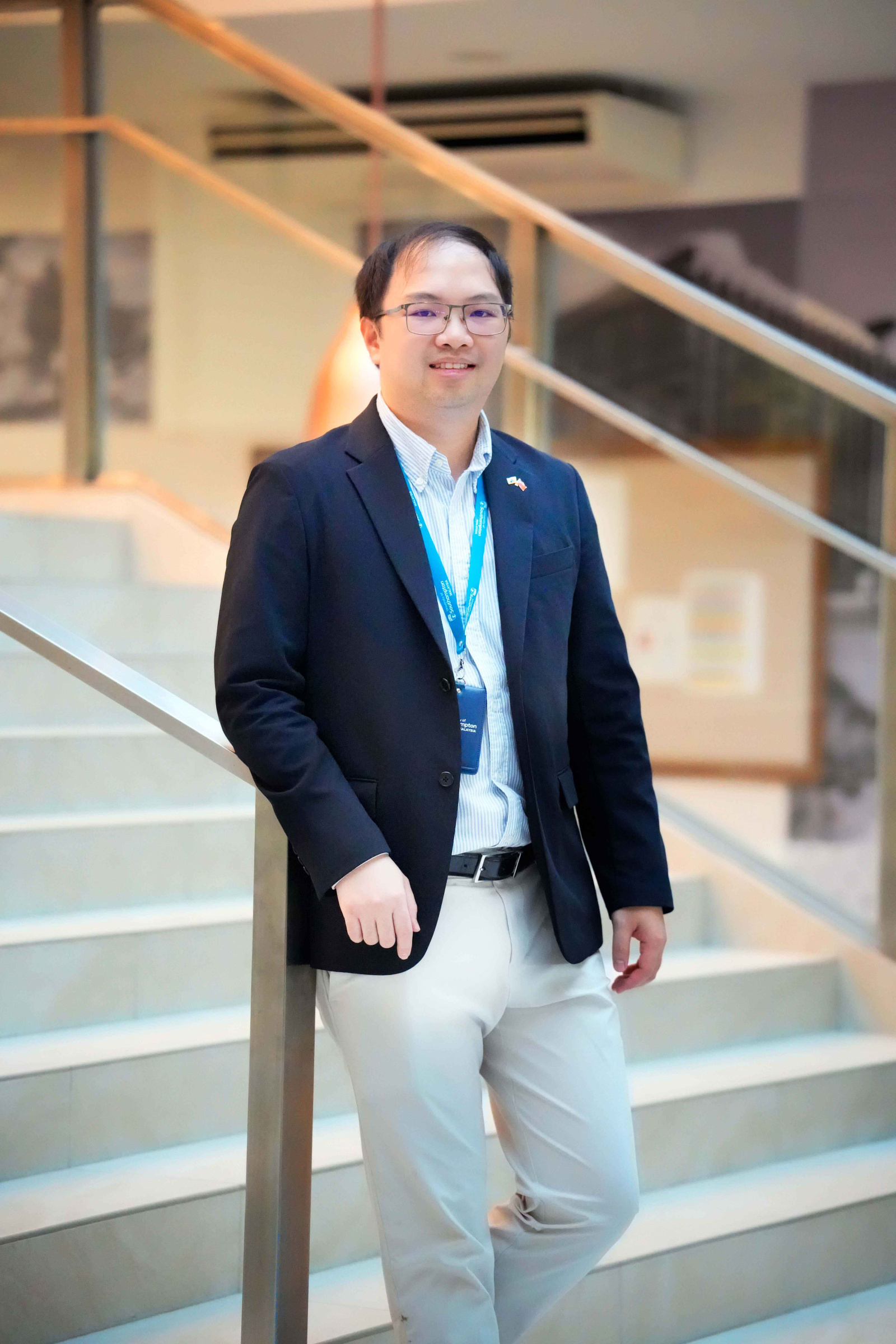
Dr Gabriel Wee Wei En is an entrepreneurship educator, researcher and innovation ecosystem builder at Southampton Malaysia Business School, University of Southampton Malaysia. He holds a Doctor of Business Administration, a Master of Business Administration and Bachelor of Commerce (Accounting and Finance) and a Graduate Certificate in Learning and Teaching from Swinburne University of Technology Australia. He is also a Senior Fellow of Advance HE (SFHEA), United Kingdom.
Before joining Southampton Malaysia, Gabriel served at Swinburne University of Technology Sarawak as Head of Department (Executive and Entrepreneurship), Research Leader in Business Innovation, and founding Chief of the Entrepreneurship Hub. His academic work integrates entrepreneurship education, applied research, enterprise development, technology commercialisation, industry engagement and regional innovation.
His contributions to education and research have received recognition at both national and institutional levels. He was awarded the National Outstanding Young Educator Award 2025 and Malaysia Influential Educator Award 2024, in addition to receiving the Research Success Award 2026 and Swinburne Sarawak Teaching Excellence Award 2024. He has also secured and delivered more than RM2.2 million in externally funded research, consultancy and training projects, working with government agencies, industry partners and international institutions.
Dr Gabriel's work in entrepreneurship education emphasises authentic, experiential and accelerator-integrated learning, connecting academic theory with venture creation, industry engagement and real-world commercialisation. He has pioneered curriculum-integrated commercialisation projects and international Work-Integrated Learning opportunities, including student placements at Alibaba Headquarters in China. His innovation work has also resulted in two MyIPO-registered copyright works: a structured Generative AI framework for business idea development and AgroTech Explorer, an interactive smart agriculture learning and technology recommendation platform. Beyond the classroom, he has supported student-founded ventures and contributes to academic, industry and public-sector collaborations across Asia and the United Kingdom.
Dr Gabriel's research focuses on entrepreneurship and innovation at the intersection of education, technology, sustainability and ecosystem development. His work examines how entrepreneurship education, accelerator participation, digital technologies, generative AI and institutional support influence entrepreneurial learning, entrepreneurial intention, venture development and commercialisation.
His applied research also covers agripreneurship and smart farming technology adoption, digital entrepreneurship and the metaverse, circular economy and sustainability, and university-industry innovation models. He has led research and teaching grants on generative AI in entrepreneurship curricula, digital agro-entrepreneurship ecosystems, entrepreneurial intention in the metaverse, accelerator-integrated entrepreneurship education, and consumer adoption of green technologies.
Key areas: entrepreneurship education; entrepreneurial intention and behaviour; innovation ecosystems; technology commercialisation; generative AI in entrepreneurship; agripreneurship and smart farming; digital entrepreneurship; sustainability and circular economy.
1. Wee, G. W. E., Tung, L. T., & Wong, B. K. M. (2026). Universities as living laboratories for circular economy: Curriculum-integrated agroforestry as environmental management in higher education. International Journal of Sustainability in Higher Education. https://doi.org/10.1108/IJSHE-01-2026-0144
Scopus Q1 | JCR Q1 | Impact Factor 3.3 | Emerald
2. Tung, L. T., Wee, G. W. E., & Hoang, D. V. (2026). Entrepreneurial education, entrepreneurial self-efficacy and entrepreneurial intention: The moderating effects of perceived structural support. Asian Education and Development Studies. https://doi.org/10.1108/AEDS-05-2025-0250
Scopus Q2 | JCR Q2 | Impact Factor 2.0 | Emerald
3. Wong, B. K. M., & Wee, G. W. E. (2025). Book review: Geography of Tourism: Image, Impacts and Issues (2nd ed.). Tourism Management, 102, 105218. https://doi.org/10.1016/j.tourman.2025.105218
Scopus Q1 | SSCI | Impact Factor 10.9 | Elsevier
4. Jee, T. W., Zhao, S., Wee, G. W. E., Kalantari, H. D., & Tan, G. W. H. (2025). Indulging in virtual luxuries: Unveiling the allure of impulse buying in metaverse. Asia Pacific Journal of Marketing and Logistics, 37(7), 1914–1936.
Scopus Q1 | SSCI | Impact Factor 3.8 | Emerald
5. Lim, W. M., et al., incl. Wee, G. W. E. (2022). What is at stake in a war? A prospective evaluation of the Ukraine and Russia conflict for business and society. Global Business and Organizational Excellence, 1–14. https://doi.org/10.1002/joe.22162
Scopus Q1 | JCR Q1 | Impact Factor 2.7 | Wiley | Highly cited
Intellectual Property
1. Structured Generative AI Prompt Framework for Automated Business Idea Report Development — Registered Copyright (Literary Work), Intellectual Property Corporation of Malaysia (MyIPO), 29 July 2026. Registration No. CRLY2026E05946. The framework provides a structured process for using Generative AI to support opportunity identification, market analysis, business modelling, strategy development and implementation planning.
2. AgroTech Explorer: Interactive Smart Agriculture Learning and Technology Recommendation Platform — Registered Copyright (Literary Work), Intellectual Property Corporation of Malaysia (MyIPO), 7 September 2026. Registration No. CRLY2026E07810. The platform combines educational content, guided exploration and technology-matching logic to help users understand and identify suitable smart agriculture technologies.
- Human Resource Management
- Management Ethics
- Entrepreneurial Management
- International Entrepreneurship